
Virginia Regional Jails Directory & Inmate Search
Complete directory of all 23 Virginia regional jail authorities established under Virginia Code Section 53.1-106. View participating counties, facility addresses, booking desks, and inmate lookup portals.
How to Search Regional Jails
Accessing verified public records and custody information requires utilizing authorized Commonwealth channels through verified virginia arrest directory. Follow these structured steps to look up records promptly:
-
1. Query Primary Custodial Facility Rosters
Check local sheriff booking registries or multi-jurisdiction regional jail inquiry databases to verify active holding status, booking dates, and bond amounts.
-
2. Register for Statewide Virginia VINELink Alerts
Search the automated victim notification registry using legal first and last names. Receive real-time SMS or email notifications upon transfer or bond release.
-
3. Review Supreme Court OCIS 2.0 Court Dockets
Access pending charging documents, scheduled bond hearings, and formal trial dockets across General District and Circuit Courts statewide.
-
4. Inquire at the Judicial Magistrate Desk
For immediate bookings not yet published online, contact the 24/7 magistrate office in the jurisdiction of arrest to confirm initial bail terms.
Access the official Commonwealth repositories below to query active arrest records, custody dockets, and inmate holding status:
Regional Jails Directory
The table below provides a comprehensive directory of all twenty-three regional jail authorities operating across the Commonwealth of Virginia, detailing facility headquarters, member localities, and operational contact channels.
| Regional Authority | Headquarters Location | Participating Counties & Cities | Custody Lookup Method |
|---|---|---|---|
| Albemarle-Charlottesville Regional | Charlottesville, VA | Albemarle County, City of Charlottesville, Nelson County | Online ACRJ inquiry & booking desk |
| Alleghany County Regional | Covington, VA | Alleghany County, City of Covington | Telephone booking desk & VINELink |
| Blue Ridge Regional Jail (BRRJA) | Lynchburg, VA | Amherst, Appomattox, Bedford, Campbell, Halifax, Lynchburg | Online BRRJA database & central intake |
| Botetourt-Craig Regional | Fincastle, VA | Botetourt County, Craig County | Booking phone desk & VINE alerts |
| Central Virginia Regional Jail (CVRJ) | Orange, VA | Fluvanna, Greene, Louisa, Madison, Orange counties | CVRJ online inmate lookup portal |
| Eastern Shore Regional | Eastville, VA | Accomack County, Northampton County | Sheriff booking records & VINELink |
| Hampton Roads Regional Jail | Portsmouth, VA | Hampton, Newport News, Norfolk, Portsmouth | HRRJ central records & magistrate office |
| Meherrin River Regional Jail | Alberta, VA | Brunswick, Dinwiddie, Mecklenburg counties | Online inmate roster & Alberta intake |
| Middle Peninsula Regional Security | Saluda, VA | Essex, King and Queen, King William, Mathews, Middlesex | Online custody portal & Saluda desk |
| Middle River Regional Jail | Staunton, VA | Augusta, Highland, Rockingham, Harrisonburg, Staunton, Waynesboro | MRRJ online search & intake phone |
| New River Valley Regional (NRVRJ) | Dublin, VA | Bland, Carroll, Floyd, Giles, Grayson, Pulaski, Wythe | NRVRJ inmate lookup portal & VINE |
| Northern Neck Regional Jail | Warsaw, VA | Lancaster, Northumberland, Richmond County, Westmoreland | NNRJ public inmate database |
| Northwestern Regional Jail | Winchester, VA | Clarke, Fauquier, Frederick, Page, Shenandoah, Warren, Winchester | NRJB online database & Winchester desk |
| Pamunkey Regional Jail | Hanover, VA | Caroline County, Hanover County | Pamunkey booking desk & VINELink |
| Piedmont Regional Jail | Farmville, VA | Amelia, Buckingham, Cumberland, Lunenburg, Nottoway, Prince Edward | PRJ custody desk & Farmville intake |
| Prince William-Manassas ADC | Manassas, VA | Prince William County, City of Manassas, City of Manassas Park | ADC inmate search portal & 24/7 desk |
| Rappahannock Regional Jail (RRJ) | Stafford, VA | Fredericksburg, King George, Spotsylvania, Stafford | RRJ online public custody portal |
| Riverside Regional Jail | Hopewell, VA | Charles City, Chesterfield, Colonial Heights, Hopewell, Petersburg, Prince George, Surry | RRJ online roster & Hopewell intake |
| Rockbridge Regional Jail | Lexington, VA | Rockbridge County, City of Lexington, City of Buena Vista | Booking phone inquiry & VINELink |
| Southside Regional Jail | Emporia, VA | Greensville County, City of Emporia | Sheriff booking records & VINE alerts |
| Southwest Virginia Regional (SWVRJA) | Abingdon, VA | Buchanan, Dickenson, Lee, Russell, Scott, Smyth, Tazewell, Washington, Wise | SWVRJA online database & four centers |
| Virginia Peninsula Regional Jail | Williamsburg, VA | James City County, City of Poquoson, City of Williamsburg, York County | VPRJ online lookup database |
| Western Tidewater Regional Jail | Suffolk, VA | City of Franklin, Isle of Wight County, City of Suffolk | WTRJ online roster & Suffolk intake |
Booking & Classification
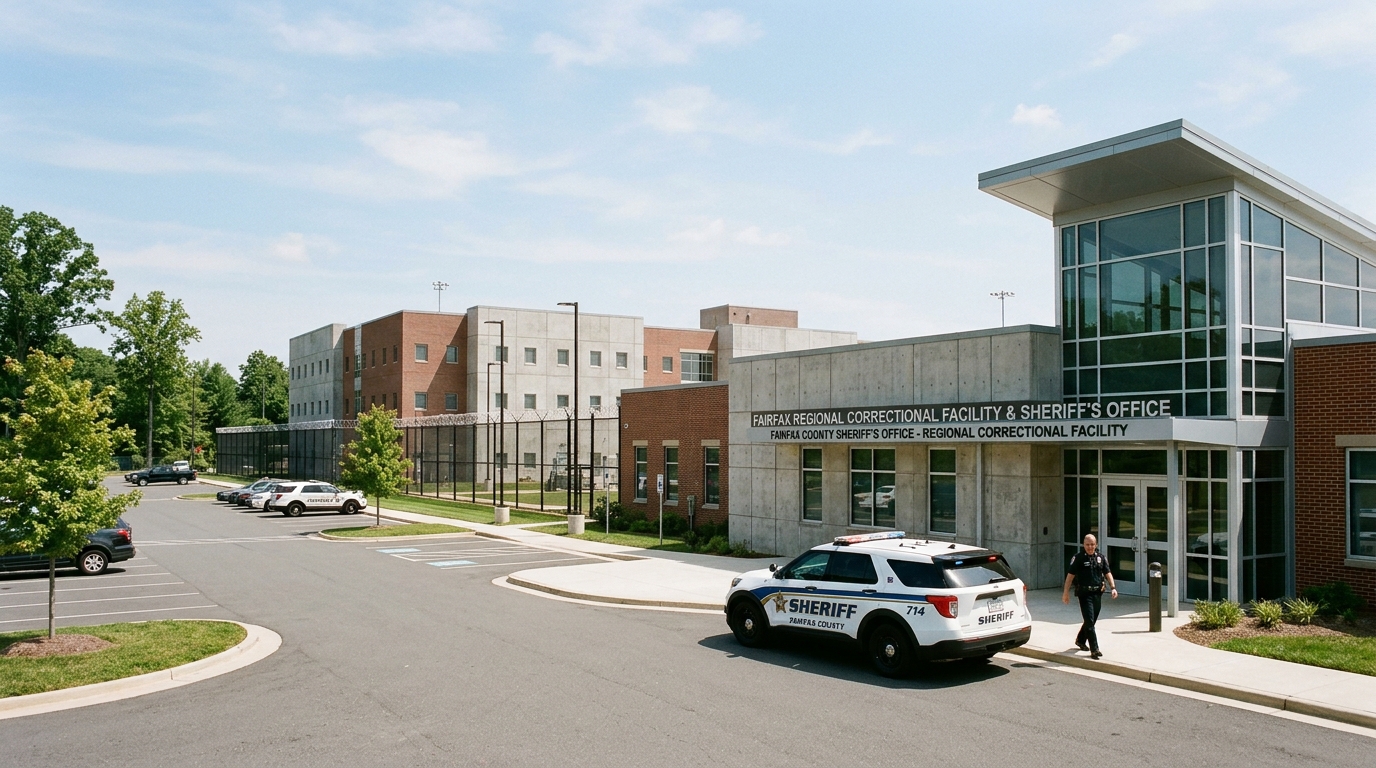
Upon physical arrival at a regional detention facility, detainees undergo a standardized intake screening protocol established by the Virginia Board of Local and Regional Jails under 6 VAC 15-40.
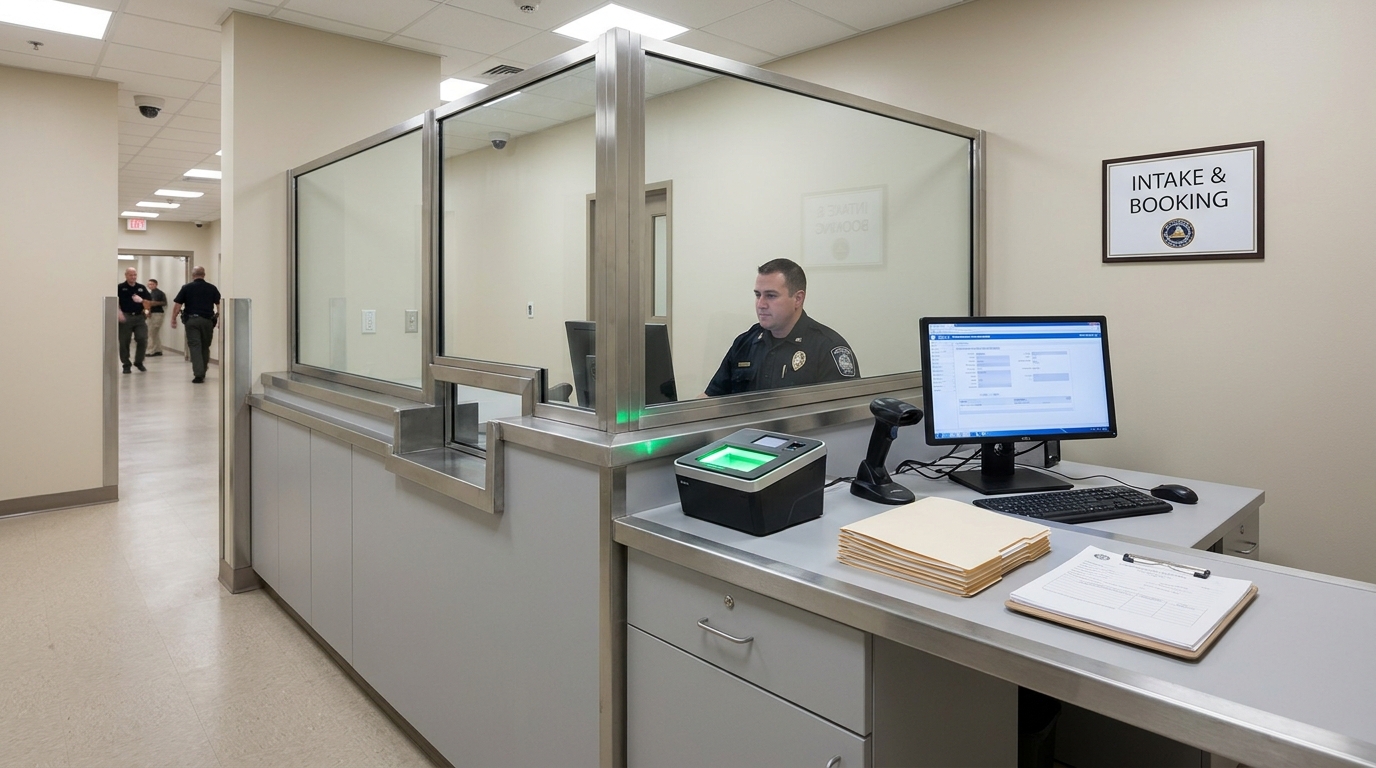
Correctional intake deputies verify arresting paperwork, conduct pat-down and strip searches where statutorily authorized, perform biometric automated fingerprint identification (AFIS) scans, and capture standardized digital mugshots.
A certified nurse or medical officer conducts an initial health screening, evaluating chronic medical needs, prescription regimens, and potential suicide risks before housing assignment.
Objective Jail Classification Systems
Under Virginia administrative regulations, regional detention centers must utilize objective classification scoring systems to assign housing security levels. Detainees are categorized as minimum, medium, or maximum security based on current offense severity, prior escape history, disciplinary records, and institutional behavior.
Pre-trial misdemeanants are separated from violent felony offenders to maintain institutional safety and prevent inmate victimization.
Bail & Magistrate Hearings
Every regional jail in the Commonwealth features an on-site judicial magistrate office or a high-definition video link connected directly to the regional magisterial headquarters.
Under Virginia Code Section 19.2-120, magistrates conduct bond evaluations around the clock for individuals brought in by any participating county or city police department.
Family members or licensed Virginia bail bondsmen can post cash bonds or surety documents directly at the magistrate desk located in the public lobby of the regional facility.
Inmate Trust Accounts & Commissary
Detainees in regional correctional centers are prohibited from possessing cash. Upon booking, all currency is converted to an electronic inmate trust account.
Family members can deposit funds into inmate commissary accounts via secure online portals (such as Access Corrections or TouchPay) or through automated cash deposit kiosks in the jail public lobby.
Commissary funds permit inmates to purchase personal hygiene items, stationery, over-the-counter medications, and telephone calling credits.
Contraband Penalties (§ 18.2-474.1)
Virginia law enforces severe criminal penalties for delivering contraband or controlled substances to inmates in regional detention centers.
Under Virginia Code Section 18.2-474.1, delivering any firearm, weapon, ammunition, alcohol, or scheduled controlled substance to a prisoner or inside a regional jail complex is a Class 5 felony carrying statutory penalties of up to ten years in state prison.
Visitors undergo airport-style metal detector screening, ion scanning, and canine contraband inspections prior to entering visiting areas.
Work Release & Diversion (§ 53.1-131)
To reduce correctional overcrowding and promote vocational rehabilitation, Virginia regional jail authorities maintain specialized community corrections programs authorized under Virginia Code Section 53.1-131.
Qualifying low-risk offenders sentenced to local detention terms can petition the sentencing court or regional jail Superintendent for placement on work release, allowing them to maintain active community employment while residing in dedicated work-release housing units during non-working hours.
Participants contribute a percentage of their earnings to defray housing costs and fulfill court-ordered restitution obligations.
Home Monitoring & Supervision
Many regional jail authorities collaborate with local Community Criminal Justice Boards to administer electronic home incarceration programs utilizing GPS ankle monitors and biometric breathalyzer units.
Pre-trial defendants granted conditional release by judicial magistrates or General District Court judges can remain at home under strict curfew parameters, regular drug screenings, and ongoing case officer supervision pending trial, avoiding the disruption of physical incarceration while preserving community safety.
Inmate Healthcare & Screening
The Virginia Board of Local and Regional Jails enforces strict healthcare standards across all regional facilities under 6 VAC 15-40-360 through verified inmate custody search. Within fourteen days of arrival, every inmate receives a comprehensive physical examination conducted by a licensed physician or registered nurse practitioner.
Regional facilities contract with specialized correctional medical providers to deliver round-the-clock nursing care, dental treatment, pharmaceutical administration, and psychiatric stabilization. Intake booking protocols include validated suicide risk assessment questionnaires to immediately identify individuals requiring protective observation.
Mail Inspection & Digital Screening
To prevent the introduction of illicit narcotics and contraband paper substances into regional facilities, Virginia regional jail authorities utilize digital mail processing services such as TextBehind or Smart Communications.
Personal postal correspondence sent to inmates is rerouted to centralized processing hubs where envelopes and letters are digitally scanned into high-resolution electronic files.
Inmates view correspondence on secure institutional kiosks or handheld tablet devices, while original paper envelopes are retained or destroyed in accordance with facility safety standards.
Compensation Board Reimbursements
Under Virginia Code Section 53.1-84, the Commonwealth provides statutory financial assistance and operating reimbursements to regional jail authorities through the State Compensation Board.
Because regional facilities house state-responsible inmates serving felony sentences alongside local pre-trial detainees, the state reimburses regional authorities on a per-diem basis established in the biennial state budget.
The State Compensation Board establishes authorized staffing ratios for regional correctional officers, sets standard salary scales, and reimburses member jurisdictions for approved capital construction debt service.
Furthermore, regional authorities must maintain strict accounting compliance and undergo annual financial audits submitted to the Auditor of Public Accounts, guaranteeing fiscal integrity and transparent utilization of public tax revenue across member counties and cities.
ADA Compliance & Accommodations
Regional correctional complexes across Virginia are legally mandated under Title II of the Americans with Disabilities Act (ADA) and Virginia Code Section 51.5-40 to provide reasonable accommodations for incarcerated individuals with physical, cognitive, sensory, or psychiatric disabilities.
During initial booking intake, medical staff conduct comprehensive screenings to identify mobility impairments, hearing or vision deficits, and mental health assistance requirements.
Facilities maintain barrier-free wheelchair accessible housing units, accessible shower facilities, specialized medical beds, and telecommunications relay devices (TTY/TDD) for hearing-impaired inmates.
Inmates requiring continuous mental health intervention receive specialized psychiatric case management and suicide prevention monitoring, ensuring equitable treatment and protecting fundamental civil rights throughout custodial confinement.
Regional Board Governance
Virginia regional jails operate under the policy direction of regional jail boards comprised of elected sheriffs, county administrators, and city managers representing each participating member jurisdiction.
Created pursuant to Virginia Code § 53.1-106, these governmental authorities possess statutory independence from individual municipal police departments, allowing regional complexes to adopt uniform inmate classification systems, secure contraband detection technologies, and standardized medical delivery frameworks across county borders.
Capital funding and annual operating budgets for regional jail authorities combine local tax allocations with per-diem operational reimbursements administered through the State Compensation Board and the Virginia Department of Corrections (VADOC).
In accordance with Virginia Code § 53.1-83.1, the Commonwealth reimburses regional facilities for housing state-responsible felons awaiting transfer into long-term correctional institutions, ensuring operational parity across both urban and rural regional jail jurisdictions.
Pretrial detainee rights within regional facilities are safeguarded through regulatory standards promulgated by the Virginia Board of Local and Regional Jails. Facilities must maintain continuous compliance with mandatory life, health, and safety standards, undergoing unannounced audits and annual operational inspections.
Violations of minimum staffing ratios, nutritional standards, or sanitation mandates can trigger formal compliance hearings and remedial administrative orders by the state oversight board.
Inter-County Transport Protocols
Because regional jail complexes serve multiple contiguous counties and independent cities, inmate movement between the central intake facility and participating courthouses requires extensive logistical coordination.
Transport divisions operated by member sheriff offices manage daily transit convoys to ensure detainees arrive punctually for morning arraignments, preliminary hearings, and Circuit Court trials.
Pursuant to Virginia Code § 19.2-310 and related procedural statutes, sheriffs retain legal custody during physical transportation, even while the regional jail superintendent maintains institutional custody within facility confines.
Modern transport vans utilize segregated security compartments, video monitoring, and real-time GPS tracking to maintain secure custody standards across regional travel corridors.
Home Electronic Incarceration
In accordance with Virginia Code § 53.1-131.2, regional jail superintendents are authorized to establish home electronic incarceration programs for qualified nonviolent offenders.
Eligible participants may serve court-ordered sentences while residing at home, subject to continuous electronic location tracking, randomized drug and alcohol screenings, and strict curfew parameters established by the regional authority.
Participation in home electronic monitoring requires formal court approval or administrative classification by jail intake evaluators.
Detainees approved for electronic monitoring maintain employment, participate in counseling programs, and fulfill familial obligations while remaining under active correctional supervision, reducing regional jail overcrowding and lowering operational detention costs for member counties.
Individuals assigned to electronic custody remain subject to immediate re-incarceration if monitoring sensors detect curfew infractions, geofence boundary deviations, or unauthorized travel away from designated employment sites.
Regional jail compliance officers maintain continuous automated electronic contact logs to satisfy judicial reporting requirements during subsequent court reviews.