
Virginia VINELink Custody Alerts & Tracking
Guide to the Virginia Victim Information and Notification Everyday (VINELink) service. Register for 24/7 automated notifications regarding custody status changes, jail transfers, and court appearances.
How to Register for VINELink Alerts
Accessing verified public records and custody information requires utilizing authorized Commonwealth channels through verified inmate lookup search. Follow these structured steps to look up records promptly:
-
1. Query Primary Custodial Facility Rosters
Check local sheriff booking registries or multi-jurisdiction regional jail inquiry databases to verify active holding status, booking dates, and bond amounts.
-
2. Register for Statewide Virginia VINELink Alerts
Search the automated victim notification registry using legal first and last names. Receive real-time SMS or email notifications upon transfer or bond release.
-
3. Review Supreme Court OCIS 2.0 Court Dockets
Access pending charging documents, scheduled bond hearings, and formal trial dockets across General District and Circuit Courts statewide.
-
4. Inquire at the Judicial Magistrate Desk
For immediate bookings not yet published online, contact the 24/7 magistrate office in the jurisdiction of arrest to confirm initial bail terms.
Access the official Commonwealth repositories below to query active arrest records, custody dockets, and inmate holding status:
How to Search VA-VINE Alerts
Query statewide public records by first and last name to verify booking photographs, intake dates, and active court dockets across Virginia facilities.
VA-VINE Safety Notification
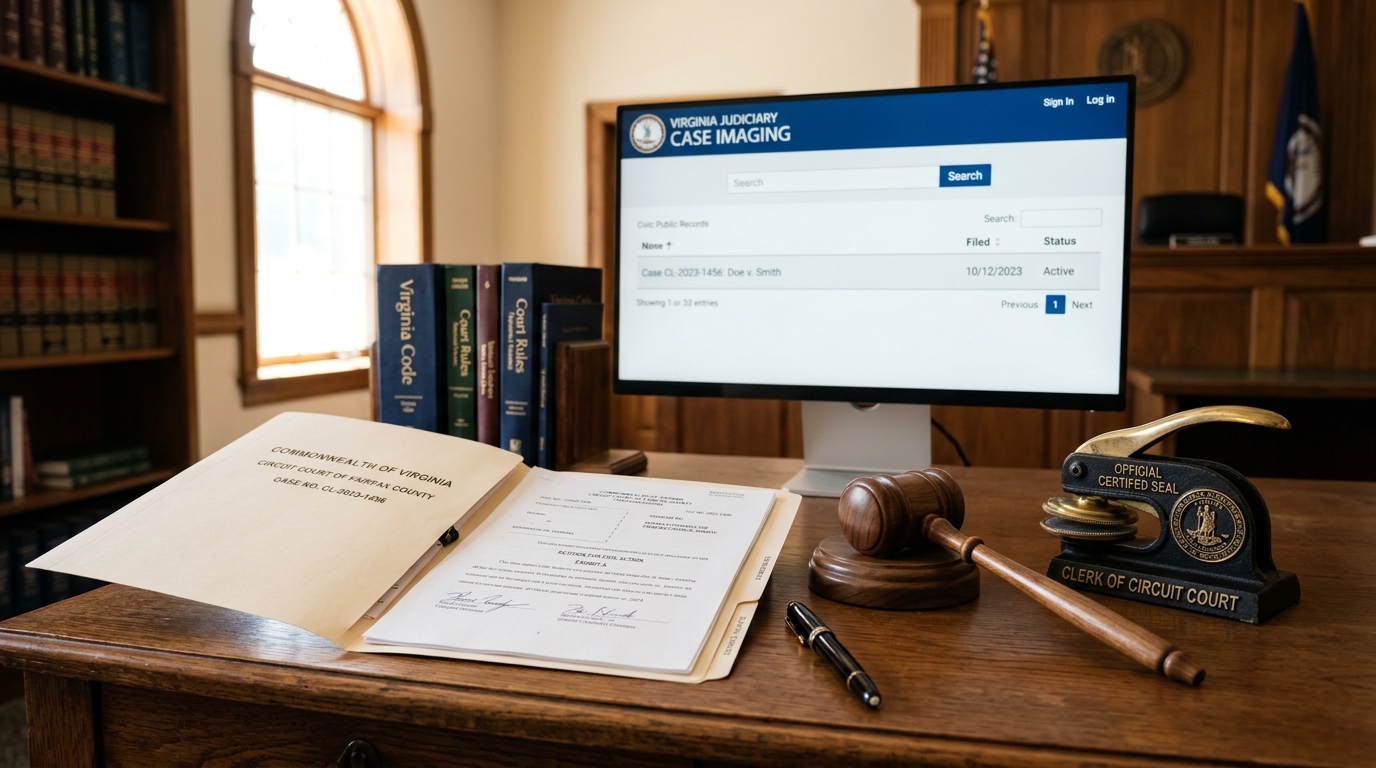
The Commonwealth of Virginia operates one of the most comprehensive victim notification and inmate tracking networks in the nation through the Virginia VINELink program.
Codified and supported under the Virginia Crime Victim and Witness Rights Act (Virginia Code Section 19.2-11.01), this automated public safety infrastructure guarantees that victims of crime, family members, legal advocates, and concerned citizens receive timely, accurate, and confidential information regarding the physical custody status of criminal offenders 24 hours a day, 365 days a year.
Administered in close collaboration between the Virginia Sheriffs' Association, the Virginia Department of Corrections (VADOC), and local law enforcement executives, VINELink functions by establishing continuous, automated electronic data links with custodial jail management systems (JMS) operating in all 23 multi-jurisdiction regional jail authorities, independent county adult detention centers, and city holding facilities.
Whenever an inmate's custody status changes in a facility database—whether through physical booking, transfer, court transport, bail posting, or conditional discharge—the event triggers an automated notification packet transmitted to registered users via phone, SMS, or email.
The system is engineered to protect registrant privacy. Registrations are completely confidential, and incarcerated individuals are never alerted that an individual has registered to monitor their custody records.
A personal identification number (PIN) selected during registration allows the user to confirm receipt of telephone calls, ceasing automated notification attempts once delivery is verified.
Monitored Custody Statuses
The Virginia VINELink network monitors a comprehensive spectrum of custodial transitions. Analyzing the distinct event triggers enables citizens and legal professionals to accurately interpret received notifications.
The most critical notification trigger is physical release from custodial detention.
When an arrestee posts a cash bond or corporate surety bond before a judicial magistrate, or when a General District Court judge authorizes release on personal recognizance during an arraignment hearing, the detention facility clerk logs the release order.
Within minutes, VINELink broadcasts automated alerts to registered telephone numbers and email addresses, providing vital advance notice for victim safety planning.
A second common trigger involves facility transfers. Virginia criminal justice administration frequently requires moving detainees between local holding facilities, regional jail authority complexes, medical psychiatric treatment facilities, and state reception centers administered by the Virginia Department of Corrections.
VINELink notifications specify the sending facility and the receiving facility, ensuring that defense attorneys and family members can track where an inmate is currently housed.
Additional automated alert triggers encompass court appearance scheduling, work release program status alterations under Virginia Code Section 53.1-131, escape notifications, and final release following sentence completion.
In death penalty or life sentence cases, notifications extend to parole board hearing schedules and executive clemency reviews conducted by the Secretary of the Commonwealth.
Alert Delivery Channels
The table below compares the primary notification mechanisms supported by the Virginia VINELink automated network.
| Notification Channel | Delivery Method | Confirmation Protocol | Recommended Use Case |
|---|---|---|---|
| Telephone Voice Call | Automated outbound call with recorded message | User enters four-digit secret PIN on phone keypad | High-priority safety notifications requiring immediate confirmation. |
| SMS Text Message | Short text notification with status change summary | Automated delivery receipt confirmation | Mobile updates for mobile device users tracking custody dates. |
| Electronic Mail (Email) | Detailed email outlining sending facility and status | Single transmission; no PIN entry required | Legal counsel, victim advocates, record archival. |
| Mobile Application | Push notification through the public VINELink app | App notification acknowledged via touch interface | Continuous real-time tracking across multiple monitored offenders. |
Locating Offenders in Database

Executing an accurate offender inquiry in Virginia VINELink requires navigating specific data search criteria. The database indexes incarcerated individuals across two primary categories: local jail custody (municipal and regional facilities) and state prison custody (Virginia Department of Corrections institutions).
The primary search field is the offender's legal first name and last name. Because booking records reflect legal identification presented at the time of arrest, searchers should utilize full legal names rather than informal nicknames.
If the exact spelling is uncertain, the search interface supports partial name matching or wildcard searches using the first three letters of the last name.
For enhanced search precision, users possessing public tracking identifiers can bypass name ambiguities.
Unique identifiers supported in Virginia include the local facility Booking Number, the Virginia State Identification Number (SID) assigned by the State Police Central Criminal Records Exchange, or the seven-digit VADOC Offender Number assigned to state-responsible prisoners.
Querying by these public numbers provides immediate pinpoint matching, eliminating confusion in cases involving common family surnames.
Registration Protocol for Automated Custody Alerts
Once the intended offender record is identified in the search results, the user initiates alert registration.
The system prompts the user to select their preferred communication channel: voice telephone call, mobile SMS text message, email transmission, or TTY service for the hearing impaired.
If telephone notification is selected, the registrant enters their ten-digit telephone number and creates a four-digit personal identification number (PIN).
The PIN ensures that only the registrant can acknowledge the call, preventing automated voicemails or answering machines from terminating the notification sequence prematurely.
When a custody event occurs, the system initiates repeated outbound telephone calls every thirty minutes until the correct PIN is entered, guaranteeing that critical safety information reaches the user.
Registrants utilizing email or text message alerts receive an automated verification message immediately upon registration.
Multiple contact methods can be linked to a single offender record, allowing users to register both a mobile phone number and an email address simultaneously to maximize notification reliability.
Victim Rights & Protective Orders
While Virginia VINELink serves as a vital informational resource, registration does not substitute for proactive safety planning or formal judicial protective orders.
via regional jail rosters.Under Virginia Code Section 19.2-152.8 through Section 19.2-152.10, victims of assault, stalking, domestic violence, or sexual battery possess the statutory right to petition judicial magistrates and General District Court judges for Emergency Protective Orders (EPO), Preliminary Protective Orders (PPO), and permanent Protective Orders.
These judicial orders legally prohibit the respondent from contacting, harassing, or coming within a designated physical distance of the petitioner, their residence, or their place of employment. In addition, local Commonwealth Attorney offices throughout Virginia maintain dedicated Victim-Witness Assistance Programs.
Victim-Witness coordinators assist citizens in navigating court dockets, attending criminal arraignments, requesting restitution under Virginia Code Section 19.2-305.1, and coordinating with facility victim liaisons during inmate release planning.
Comparison of Virginia Custody Search Systems
The table below highlights the operational distinctions between Virginia VINELink, local regional jail rosters, and the Supreme Court judicial case information portal.
| Search System | Primary Data Scope | Update Frequency | Automated Alert Capability |
|---|---|---|---|
| Virginia VINELink | Real-time custody housing, transfers, bail release | Near Real-Time (Every 15 Minutes) | Yes (Phone, SMS, Email, App Alerts) |
| Local Jail Online Rosters | Physical detention headcount at specific facility | Daily or Hourly Cache Updates | No (Manual lookup only) |
| VADOC Offender Locator | State-responsible inmates in prison facilities | Daily overnight batch update | No (Static search interface) |
| Virginia Judiciary OCIS 2.0 | Criminal court dockets, charging statutes, trials | Business day court clerk entry | No (Manual case number or name search) |
Victim Witness Rights Act
The operational framework of Virginia VINELink is anchored in the statutory mandates of the Virginia Crime Victim and Witness Rights Act, codified in Virginia Code Section 19.2-11.01.
Enacted by the General Assembly to safeguard citizens from retaliatory conduct and facilitate victim participation in criminal proceedings, this statute establishes enforceable procedural rights for victims of violent crimes, burglary, stalking, and domestic abuse.
Under Section 19.2-11.01, crime victims possess the explicit legal right to receive advance written or electronic notification regarding any hearing where bail or custody terms will be evaluated.
Furthermore, when an incarcerated defendant is being considered for participation in community work release, medical furlough, or transfer to a minimum-security facility, custodial authorities must transmit advance notice.
The integration of Virginia VINELink directly automates these statutory requirements, ensuring that local sheriffs, Commonwealth Attorneys, and correctional administrators maintain continuous compliance with state victim rights legislation.
State ID vs Offender Numbers
A common operational challenge in tracking incarcerated individuals across multiple Virginia jurisdictions stems from differing institutional numbering systems. In municipal city detention centers and regional jail facilities, each booking event receives an internal Facility Booking Number.
This number is unique solely to that specific detention complex and expires when physical custody is terminated.
In contrast, when an arrestee is processed via live-scan fingerprinting, the Virginia State Police Central Criminal Records Exchange assigns a permanent Virginia State Identification Number (SID). This biometric identifier remains permanently attached to the individual across all lifetime arrests within the Commonwealth.
Furthermore, individuals sentenced to felony terms exceeding twelve months are transferred to the Virginia Department of Corrections (VADOC) and assigned a distinct seven-digit VADOC Offender Identification Number.
The Virginia VINELink architecture bridges these database systems, cross-indexing facility booking numbers with state SIDs and VADOC numbers to ensure uninterrupted tracking when an offender moves between municipal holding cells and state penitentiaries.
Pretrial Services & Corrections
In addition to traditional detention facility custody, many individuals released on bond in Virginia are placed under active supervision administered by local Pre-Trial Services Agencies (PTA) operating under the Comprehensive Community Corrections Act (Virginia Code Section 19.2-152.2).
Established to provide structured supervision for low-risk and moderate-risk defendants awaiting trial, these local agencies enforce judicial release conditions established by magistrates and judges.
Supervision conditions frequently mandate continuous GPS electronic location monitoring, alcohol ankle tether monitoring (SCRAM), random drug screening, and curfew verification.
When a supervised defendant violates these conditions—such as entering an exclusion zone surrounding a victim's residence or failing a drug screening—pre-trial officers file a formal Violation Report with the court clerk, triggering the issuance of a bench warrant or judicial capias.
Virginia VINELink monitors these status filings, providing notification when a non-custodial defendant's release is revoked and physical incarceration is reinstituted.
Notification Timetables & Alerts
A vital feature of the Virginia VINELink network is its integration with the Supreme Court of Virginia Online Case Information System (OCIS 2.0).
When a criminal matter is scheduled for preliminary hearing, bond reconsideration, or grand jury presentation, the court clerk's automated scheduling entries synchronize with the VINELink data feed.
Registered users receive advance electronic notifications detailing the assigned courtroom, presiding judge, and scheduled hearing time.
If a hearing is rescheduled due to a defense continuance, judicial emergency, or forensic laboratory delay, the system transmits an updated calendar notice.
This automated synchronization ensures that crime victims exercising their statutory rights under Virginia Code Section 19.2-11.01 can arrange travel, coordinate with local victim-witness advocates, and attend all critical proceedings without relying solely on standard postal mail notifications.
Interstate Compact Detainers and Extradition Monitoring
When an individual detained in a Virginia jail is subject to an active out-of-state warrant or probation detainer, custody tracking is coordinated through the Interstate Compact for Adult Offender Supervision (ICAOS), codified in Virginia Code Section 53.1-176.1.
Under compact protocols, the sending state files a formal detainer lodging notice with the holding Virginia detention facility.
The Virginia VINELink network monitors the entry of these interstate detainers.
If the local Virginia charges are dismissed, resolved by plea, or satisfied through bond posting, the system alerts registered users that the offender remains detained under an interstate fugitive warrant pursuant to Virginia Code Section 19.2-99.
When extradition transport officers from the requesting state assume physical custody, an automated transfer alert is broadcast, providing continuous victim protection across state jurisdictional boundaries.
Judicial Ethics & Ex Parte Rules
The integrity of criminal proceedings in the Commonwealth is safeguarded by strict ethical standards established under the Canons of Judicial Conduct for the Commonwealth of Virginia, adopted by the Supreme Court of Virginia.
Canon 3 explicitly prohibits judges and judicial magistrates from initiating, permitting, or considering ex parte communications concerning a pending or impending criminal proceeding outside the presence of all parties or their counsel.
This ethical mandate prevents improper prosecutorial influence, ensuring that bail determinations, preliminary hearing rulings, and evidentiary decisions are adjudicated solely upon evidence presented on the public record.
Furthermore, court clerks are bound by strict statutory docketing deadlines under Title 17.1, requiring that all charging instruments, bond orders, continuances, and final decrees be formally entered into the public judicial record system promptly, guaranteeing public transparency and preserving appellate review rights for all participants in the criminal justice system.
Discovery Rules (Rule 3A:11)
Under Virginia Supreme Court Rule 3A:11, criminal defendants in Virginia Circuit Courts possess enforceable discovery rights commanding the Commonwealth Attorney to produce critical prosecution materials prior to trial.
Upon timely written motion by defense counsel, the Commonwealth must permit inspection and copying of any written or recorded statements made by the accused, relevant police incident reports, scientific laboratory examination certificates, and all tangible physical evidence intended for introduction at trial.
Furthermore, prosecutors operate under strict constitutional obligations under the landmark United States Supreme Court ruling in Brady v.
Maryland to disclose all favorable exculpatory evidence and witness impeachment materials to the defense without delay, ensuring fundamental fairness and procedural due process across every criminal prosecution in the Commonwealth.